
To layout a raised garden bed for companion planting, start by mapping plant heights, root depths, and growth rates. This complete guide reveals the proven methods for maximizing space while pairing plants that boost each other’s growth.
You’ll discover expert tips for arranging tall, medium, and low crops in harmony. We’ll cover companion pairings, spacing strategies, and seasonal rotation to keep your bed productive. Keep reading to transform your raised bed into a thriving, self-supporting ecosystem.
Best Raised Garden Bed Layout Tools for Companion Planting
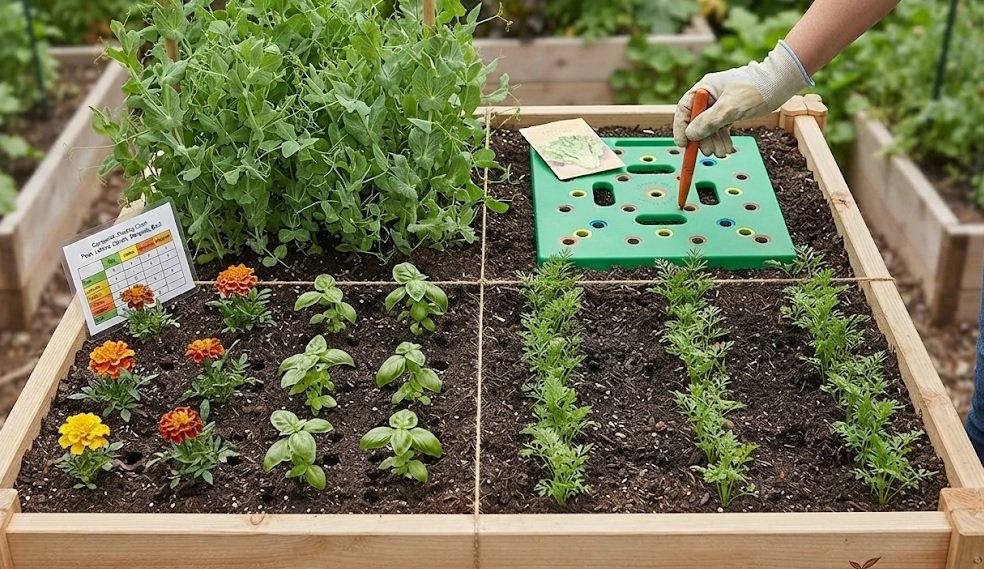
Garden In Minutes® Plant & Garden Spacing Tool – Best Overall Choice
This innovative stainless steel tool features pre-marked spacing guides for over 30 common vegetables. It eliminates guesswork when laying out companion plant grids. The laser-etched measurements remain readable for years, making it ideal for planning dense polyculture beds. It is the best option for gardeners who want precision without complex calculations.
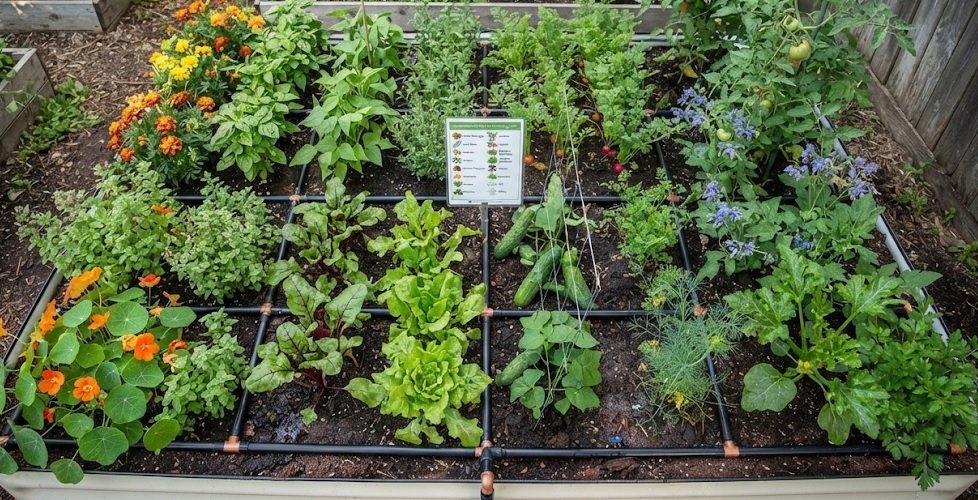
Garden Grid™ Watering System by Garden In Minutes – Best for Efficiency
This raised bed kit combines a built-in irrigation grid with a 9-square-foot planting guide. Each square aligns perfectly with companion planting principles, ensuring proper airflow between species. The integrated drip system delivers water directly to roots, reducing leaf moisture and fungal issues. It is highly recommended for busy gardeners seeking automated, space-efficient layouts.
Square Foot Gardening Grid – Heavy-Duty PVC Model – Best Budget Option
This durable PVC grid divides your bed into 12-inch squares, simplifying companion plant pairings. It is ideal for beginners using the proven square-foot method. The grid rests on the soil surface, allowing easy removal for seasonal planting adjustments. Its lightweight design makes it portable and simple to store between growing cycles.
Understanding Companion Planting Layout Principles for Raised Beds
Before placing a single seed, you must understand how plants interact in a confined space. A raised bed creates a unique microclimate where neighbors directly influence growth, pest resistance, and soil health. The key is to mimic nature’s layered ecosystems while maximizing your harvest yield.
The Three-Tier Vertical Strategy
Successful raised bed layouts rely on a vertical structure to capture sunlight efficiently. This approach prevents taller plants from shading shorter companions that need full sun exposure.
- Tall crops (back/north side): Tomatoes, pole beans, and okra act as living trellises and windbreaks for smaller plants.
- Mid-height companions (center): Peppers, eggplants, and bush cucumbers fill the middle layer without competing for root space.
- Low-growing ground cover (front/edges): Lettuce, carrots, and herbs shade the soil, retaining moisture and suppressing weeds.
Root Depth Zoning for Underground Harmony
Companion planting fails when roots compete for the same water and nutrients. Divide your bed into shallow, moderate, and deep root zones to ensure harmony below the surface.
Place shallow-rooted plants like onions and garlic near the edges where soil dries faster. Allocate the deep center zone for tomatoes and squash, whose extensive taproots access water reserves that shallow plants cannot reach. This zoning technique is a proven method for reducing transplant shock and boosting overall vigor.
Step-by-Step Guide to Mapping Your Raised Bed Grid
Once you understand the principles, it is time to translate them into a practical, visual plan. A well-drawn grid prevents overcrowding and ensures every companion plant receives adequate airflow. Follow this systematic approach to create a layout that thrives all season long.
Step 1: Measure and Divide Your Bed into Zones
Start by measuring the interior dimensions of your raised bed. Standard beds are typically 4×4, 4×8, or 3×6 feet, which divide evenly into manageable planting squares.
- Mark 12-inch squares using your spacing tool or a PVC grid to create a visual map.
- Assign each square a purpose based on the three-tier strategy—tall, mid, or low growth.
- Label the north side for tall crops to prevent them from casting shade across the entire bed.
Step 2: Select Proven Companion Pairings
Choosing the right neighbors is critical for pest control and nutrient sharing. Certain combinations actively boost growth, while others stunt development.
- Tomatoes + Basil: Basil repels hornworms and improves tomato flavor and vigor.
- Carrots + Onions: The strong scent of onions deters carrot flies effectively.
- Lettuce + Radishes: Radishes break up soil for lettuce roots and mature quickly as a living mulch.
Step 3: Plan for Succession and Interplanting
Maximize your harvest by staggering planting times within the same grid. Fast-growing crops like radishes can be harvested before slower companions, like carrots, need the space.
This technique, known as interplanting, keeps your bed productive and reduces bare soil. It is a proven method for extending your growing season without requiring additional garden space.
Common Companion Planting Mistakes to Avoid in Raised Beds
Even with a solid plan, subtle errors can undermine your companion planting efforts. Many gardeners overcrowd their beds, leading to poor airflow and rampant disease. Recognizing these pitfalls early will save your harvest and keep your soil healthy.
Overcrowding and Poor Air Circulation
It is tempting to pack as many plants as possible into a raised bed. However, dense foliage traps humidity, creating the perfect environment for powdery mildew and fungal rot.
- Follow spacing guidelines on seed packets, even if the bed looks empty at first.
- Prune aggressively to maintain airflow between tall crops like tomatoes and peppers.
- Use vertical trellises to lift vining plants off their neighbors, reducing contact.
Pairing Incompatible Species
Not all plants are good neighbors. Some release chemicals that inhibit the growth of others, a process called allelopathy.
Avoid pairing fennel with almost anything, as it stunts most vegetables. Keep beans and onions separate, as they actively suppress each other’s root development. Always research pairings before committing them to your grid layout.
Ignoring Seasonal Light Changes
A layout that works in June may fail by August as the sun’s angle shifts. Tall crops on the south side can cast long shadows over low-growing companions late in the season.
Monitor sunlight patterns monthly and be ready to adjust your grid. Consider planting heat-loving crops that thrive in partial afternoon shade to maximize every square foot.
Seasonal Rotation Strategies for Continuous Companion Planting
Your raised bed layout should never remain static throughout the year. Rotating crops seasonally prevents soil depletion and disrupts pest life cycles. This dynamic approach keeps your companion planting system productive and resilient across multiple harvests.
Spring to Summer Transition Plan
As cool-season crops bolt in rising temperatures, replace them with heat-loving companions. This transition requires careful timing to avoid leaving bare soil that invites weeds.
- Harvest early lettuce and peas by late spring to free up valuable grid space.
- Plant warm-season crops like peppers and basil in the vacated squares immediately.
- Add fast-growing trap crops like nasturtiums to lure aphids away from your new transplants.
Fall Rejuvenation with Nitrogen Fixers
After summer vegetables fade, use the autumn window to rebuild soil fertility. Planting nitrogen-fixing cover crops prepares your bed for the next growing season.
- Sow clover or vetch in spent squares to restore nitrogen levels naturally.
- Interplant garlic and onions around cover crops for an early spring harvest.
- Leave roots in the ground to decompose and improve soil structure over winter.
Year-Round Companion Pairing Chart
Use this quick reference to plan your seasonal rotations effectively. Matching crops by season ensures they thrive together without competing for resources.
| Season | Primary Crop | Best Companion | Benefit |
|---|---|---|---|
| Spring | Lettuce | Radish | Soil aeration |
| Summer | Tomato | Basil | Pest deterrence |
| Fall | Garlic | Clover | Nitrogen fixation |
Advanced Companion Planting Layouts for Specific Raised Bed Sizes
Different raised bed dimensions require unique layout strategies to maximize companion planting benefits. A 4×4 bed demands intensive spacing, while a 4×8 bed offers more flexibility for vertical growing. Here are proven layouts tailored to the most common bed sizes.
Optimizing a 4×4 Foot Raised Bed Grid
Square foot gardening excels in compact 4×4 beds, allowing you to pack diverse companions into a small area. Divide the bed into sixteen 12-inch squares, each dedicated to a specific pairing.
- Center squares: Plant one tomato with basil on the north side for pest protection.
- Corner squares: Place carrots and onions together to maximize root zone usage.
- Edge squares: Use trailing nasturtiums to spill over the sides and deter aphids.
Designing a Spacious 4×8 Foot Raised Bed
Longer beds allow for dedicated rows and more ambitious companion groupings. This layout creates distinct microclimates that support a wider variety of crops.
- North row: Install a trellis for pole beans and interplant with squash for ground cover.
- Middle rows: Alternate peppers with marigolds to repel nematodes and add color.
- South row: Plant low-growing lettuce and spinach that thrive in partial shade.
Vertical Companion Planting for Narrow Beds
If your raised bed is only 2 feet wide, focus on vertical companions that grow upward rather than outward. This approach multiplies your growing space without requiring a larger footprint.
Pair climbing cucumbers with bush beans at the base, which fix nitrogen for heavy feeders. Use the bed’s height to create layers, ensuring every plant receives adequate sunlight and airflow.
Soil Health and Nutrient Management for Companion Planting Beds
Companion planting success hinges on the living soil beneath your grid. Healthy soil teeming with microbes supports stronger root systems and enhances nutrient uptake. Without proper soil management, even the best companion pairings will struggle to thrive.
Building a Nutrient-Rich Soil Foundation
Start with a balanced blend of topsoil, compost, and aged manure to create a fertile base. Aim for a loamy texture that retains moisture while draining excess water effectively.
- Add 2-3 inches of compost annually to replenish organic matter depleted by heavy feeders.
- Incorporate worm castings to introduce beneficial microbes that aid nutrient absorption.
- Test soil pH regularly to maintain the ideal 6.0-7.0 range for most vegetables.
Feeding Heavy Feeders vs. Light Feeders
Different companion plants have vastly different nutritional demands. Grouping them strategically prevents competition and ensures each species gets what it needs.
Heavy feeders like tomatoes and squash require consistent nitrogen and potassium throughout the season. Pair them with light-feeding herbs like basil, which thrive in leaner soil and repel pests simultaneously.
Using Dynamic Accumulators as Living Fertilizers
Certain deep-rooted plants, known as dynamic accumulators, draw minerals from deep soil layers. When chopped and dropped, they release these nutrients for shallow-rooted companions.
- Plant comfrey or borage at the bed’s edge to mine potassium and calcium.
- Cut leaves monthly and scatter them as mulch around heavy-feeding crops.
- Allow roots to remain in the soil to improve aeration and structure over time.
Pest Control and Natural Deterrents Through Strategic Pairings
One of the greatest benefits of companion planting is natural pest management. By strategically placing repellent plants, you can reduce or eliminate the need for chemical pesticides. This creates a balanced ecosystem where beneficial insects thrive and pests are kept at bay.
Repellent Plants That Protect Vulnerable Crops
Certain aromatic herbs and flowers emit strong scents that confuse or repel common garden pests. Integrating these into your raised bed layout provides a chemical-free defense system.
- Marigolds: Release chemicals from their roots that deter nematodes and whiteflies.
- Basil: Repels thrips, mosquitoes, and tomato hornworms when planted near tomatoes.
- Nasturtiums: Act as a trap crop, luring aphids away from your valuable vegetables.
Attracting Beneficial Predators with Flowering Companions
Not all insects are harmful; many prey on destructive pests. Planting flowers that attract these beneficial predators creates a self-regulating pest control system.
Dill and fennel attract ladybugs and lacewings, which consume aphids and mites. Yarrow and cosmos draw parasitic wasps that target caterpillars, keeping your leafy greens safe.
Creating a Pest-Resistant Layout Pattern
How you arrange repellent plants matters as much as which ones you choose. Interplanting deterrents throughout the bed, rather than in one corner, maximizes their protective reach.
- Scatter marigolds at the corners and center of your bed to create a scent barrier.
- Alternate rows of basil between tomato and pepper plants for continuous coverage.
- Edge the bed with chives or garlic to deter tunneling pests like root maggots.
Conclusion: Mastering Your Raised Garden Bed Companion Planting Layout
Successfully laying out a raised garden bed for companion planting transforms your garden into a thriving, self-sustaining ecosystem. By applying the vertical strategies, seasonal rotations, and natural pest controls covered here, you maximize yields while minimizing effort.
Start with a simple grid plan and refine it each season based on your observations. Your garden journal will become your most valuable tool for continuous improvement.
Ready to build your dream garden? Share your layout plans in the comments below, and subscribe for more expert gardening tips to keep your beds productive all year long.
Frequently Asked Questions about Raised Garden Bed Companion Planting Layout
What is the best layout for a 4×4 raised garden bed with companion planting?
The optimal 4×4 layout divides the bed into sixteen 12-inch squares using the square-foot gardening method. Place tall crops like tomatoes on the north side with basil underneath, and fill the center with peppers surrounded by marigolds.
Use the southern edge for low-growing lettuce, carrots, and radishes that thrive in partial shade. This arrangement maximizes sunlight exposure while ensuring compatible companions support each other’s growth.
How do I space companion plants in a raised bed?
Spacing depends on the mature size of each plant and its root depth. Use the seed packet’s recommended spacing as a baseline, then adjust to account for companion pairings that share vertical or underground space.
A general rule is to leave 12 inches between large plants and 4-6 inches for small herbs and greens. Overcrowding reduces airflow and invites disease, so prioritize breathing room over maximizing plant count.
Which plants should never be planted together in a raised bed?
Avoid pairing fennel with almost any vegetable, as it releases chemicals that stunt growth. Keep beans and onions separate, since they actively suppress each other’s root development and reduce yields significantly.
Also avoid planting tomatoes near potatoes, as they compete for nutrients and spread blight. Walnut trees nearby can also harm sensitive plants due to juglone toxicity in their roots.
How do I rotate companion plants between seasons?
Rotate crops by plant family to prevent soil depletion and break pest cycles. Move heavy feeders like tomatoes to a different square each season, and follow them with nitrogen-fixing legumes like beans or peas.
Keep a garden journal to track which crops occupied each square. This simple practice helps you plan future layouts and ensures your soil remains balanced and productive year after year.
What are the best companion plants for tomatoes in a raised bed?
Basil is the classic tomato companion, repelling hornworms and improving flavor. Marigolds deter nematodes, while borage attracts pollinators and adds trace minerals to the soil.
Avoid planting tomatoes near corn or fennel, which attract pests or inhibit growth. Carrots and onions also work well, using different root zones to reduce competition for nutrients.
How deep should a raised bed be for companion planting?
A depth of 12 inches is sufficient for most vegetables, including shallow-rooted lettuce and herbs. For deep-rooted crops like tomatoes, carrots, and potatoes, aim for 18-24 inches to allow proper root development.
Deeper beds also retain moisture better and provide more space for beneficial soil organisms. If your bed sits on hard ground, consider adding a bottom layer of cardboard to suppress weeds while allowing drainage.
Can I use companion planting to control pests without chemicals?
Yes, strategic companion planting significantly reduces pest pressure naturally. Repellent plants like marigolds, garlic, and chives deter common insects, while flowering plants attract beneficial predators like ladybugs and lacewings.
For best results, scatter deterrents throughout the bed rather than grouping them. Combine this approach with healthy soil and proper spacing to create a resilient ecosystem that rarely needs intervention.
What is the best way to plan a raised bed layout for beginners?
Start with a simple 4×4 grid and choose just three or four companion pairings, such as tomatoes with basil or carrots with onions. Use a physical grid or spacing tool to map out your squares before planting anything.
Keep notes on what works and what doesn’t, then expand your layout each season. Begin with easy, proven pairings to build confidence before experimenting with advanced techniques like interplanting and vertical trellising.